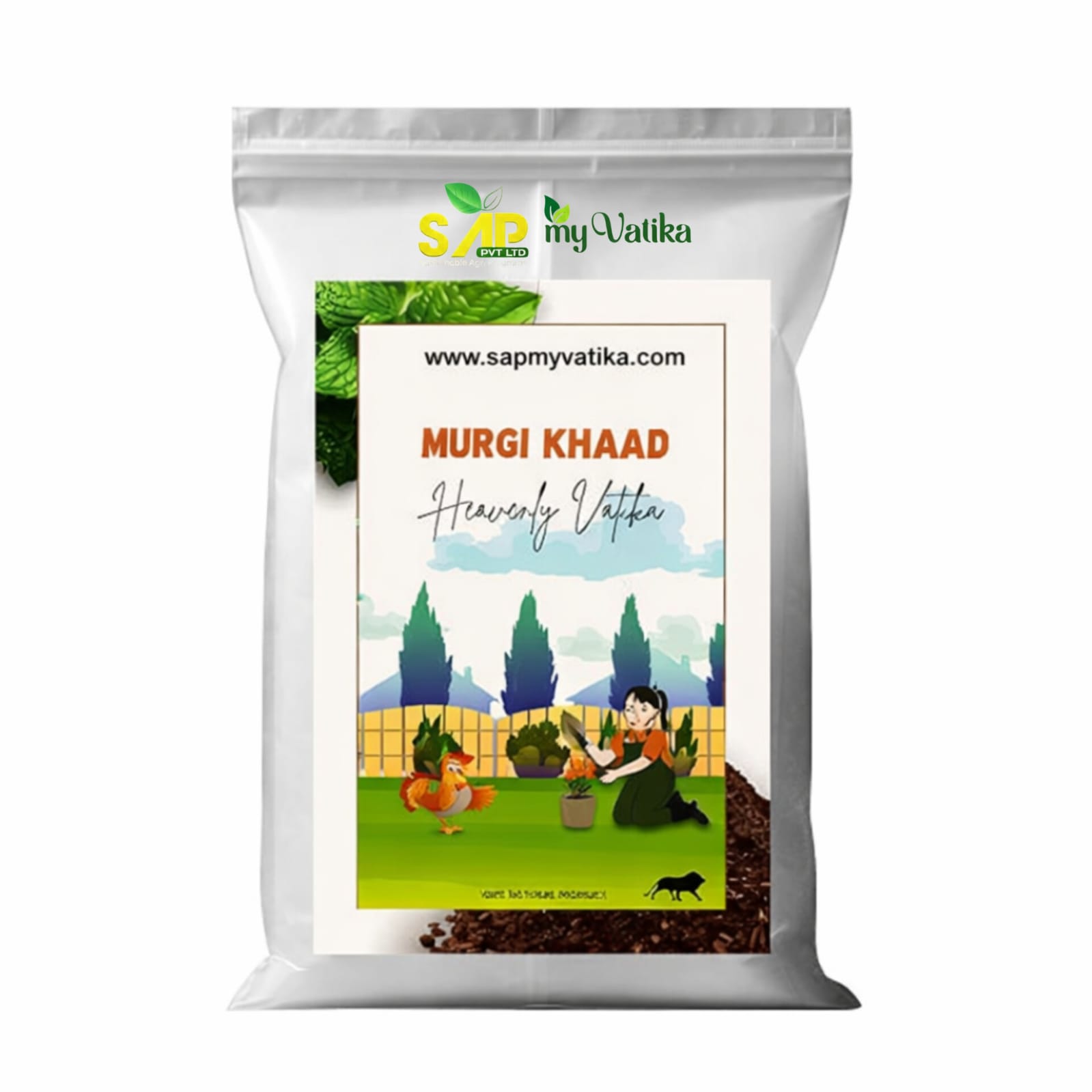
Murgi khaad, or poultry manure, is one of the richest organic fertilizers in India. Yet many home gardeners hesitate: Will it burn my plants? Does it smell? Is it safe on food crops? The answer depends almost entirely on one thing: whether it's properly composted.

Murgi Khaad – Organic Manure Fertilizer for Nutrient-Rich Soil, Faster Plant Growth & Higher Yield
Why it's so valuable
Fully composted poultry manure carries roughly 3–4% nitrogen, 2–3% phosphorus and 1.5–2% potassium. That's well above vermicompost (about 2–3% nitrogen) and cow dung compost (1–1.5%). It also supplies calcium, magnesium, sulphur, zinc and copper, and feeds soil biology as it breaks down.
Raw vs composted: the safety question
Raw poultry manure is high in ammonia, which can scorch roots and leaves. It can also carry pathogens like Salmonella, smells strong, and is so concentrated it overwhelms plants.
Composting changes this. Over 8–12 weeks, heat from decomposition eliminates most pathogens, brings ammonia down to safe levels, stabilises nutrients and removes most of the odour.
Quick smell test: Well-composted manure smells earthy, like good compost. A sharp ammonia smell means it needs more time.
Is it safe for food vegetables?
Yes, fully composted murgi khaad is safe for home garden vegetables, for the same reason cow dung compost and vermicompost are. Follow normal good practice: work it into the soil (not onto leaves or fruit), leave 2–3 weeks before harvest, and wash vegetables well.
Which plants love it
-
Leafy greens (palak, methi, coriander): visible gains in leaf size and colour
-
Fruiting vegetables (tomato, chilli, brinjal, capsicum): useful during vegetative and early fruiting stages
-
Root vegetables (potato, carrot, radish): phosphorus supports root development
-
Roses, hibiscus, marigold: good during vegetative growth; reduce nitrogen once flowering starts
Where to be careful
Avoid it for succulents, cacti and adenium. Keep it away from stems and root crowns, and hold off on solid manure for young seedlings until they have a few true leaves.
How to use it
-
Garden beds: Mix 100–150 g per square metre into the top 15–20 cm, a week before planting. Top-dress monthly during the growing season, away from stems.
-
Pots: 1–2 tablespoons per litre of potting mix, or one tablespoon per 6 inches of pot size monthly as a top dressing.
-
Liquid feed: Soak 50 g in 5 litres of water for 24 hours, dilute 1 part in 8–10 parts water, and use as a soil drench every 2–3 weeks.
Murgi khaad, vermicompost or cow dung compost?
Choose murgi khaad for fast, rich nitrogen, vermicompost for microbial boost (great for seedlings and containers), and cow dung compost for bulk organic matter and long-term soil building. Many gardeners use all three through the year.
Bottom line: Properly composted murgi khaad is safe and highly effective. Buy from a supplier who can confirm full composting, and use it like any organic manure.
📞 Order murgi khaad online: sapmyvatika.com | Kisan Helpline: 7303037568 ✅ ICAR Recommended | DPIIT Recognised | ISO 9001:2015 Certified
Murgi Khaad – Organic Manure Fertilizer for Nutrient-Rich Soil, Faster Plant Growth & Higher Yield