Seaweed Fertilizer for Plants — Does It Actually Work in Indian Conditions?
SAP MyVatika | Organic Fertilizer & Crop Health | ~3 min read
Seaweed fertilizer is everywhere in Indian gardening conversations right now. The pitch is always the same: natural, sustainable, boosts growth without chemicals. But “natural” doesn’t automatically mean effective, so here’s what Indian research actually says, not what the bottle says.
What seaweed fertilizer actually is
Most seaweed fertilizers sold in India are liquid extracts from brown or red algae like Sargassum, Gracilaria, or Ascophyllum. They’re not valued for NPK, which is low. What they bring is micronutrients, amino acids, and natural growth hormones like auxins and gibberellins. They work more like biostimulants than plant food: they help plants use the nutrients already in the soil and handle stress better.
What Indian research has found
- Mung bean (CSIR-CIMAP, Bengaluru): Gracilaria extract improved growth, yield, and nutrient uptake, with a 30% extract performing best.
- Chilli and tomato (Tamil Nadu): Sargassum extract showed measurable growth improvements.
- Wheat and chickpea (north India): Seaweed-treated plots had better nitrogen levels and higher yield than chemical fertilizer alone.
- Brinjal: Seaweed extract on top of the recommended fertilizer dose beat the fertilizer dose alone.
In almost every study, seaweed was tested as a supplement, not a replacement.
Where it helps most
- Root and tuber crops: Gains of over 21% in one meta-analysis, against about 15% across all crops.
- Salinity stress: Foliar sprays at lower concentrations helped plants cope with saline soil or water, which matters in coastal Maharashtra, Gujarat, and Tamil Nadu.
- Quality: Vitamin C, sugar content, and starch improved more reliably than raw yield.
Where the evidence is weaker
Most studies are small trials over one season, and results vary with the seaweed species, extraction method, and crop. Yield claims for wheat, rice, and maize aren’t well supported yet. Batch quality also varies between brands, so buying from a manufacturer with documented quality standards matters.
So, does it make sense?
Yes, as a supplement. Use it as a foliar spray or soil drench alongside your normal fertilizer schedule, especially for saline soil or root vegetables. Don’t treat it as a full replacement for regular fertilizer. The benefit is modest, not miraculous, but it’s real.
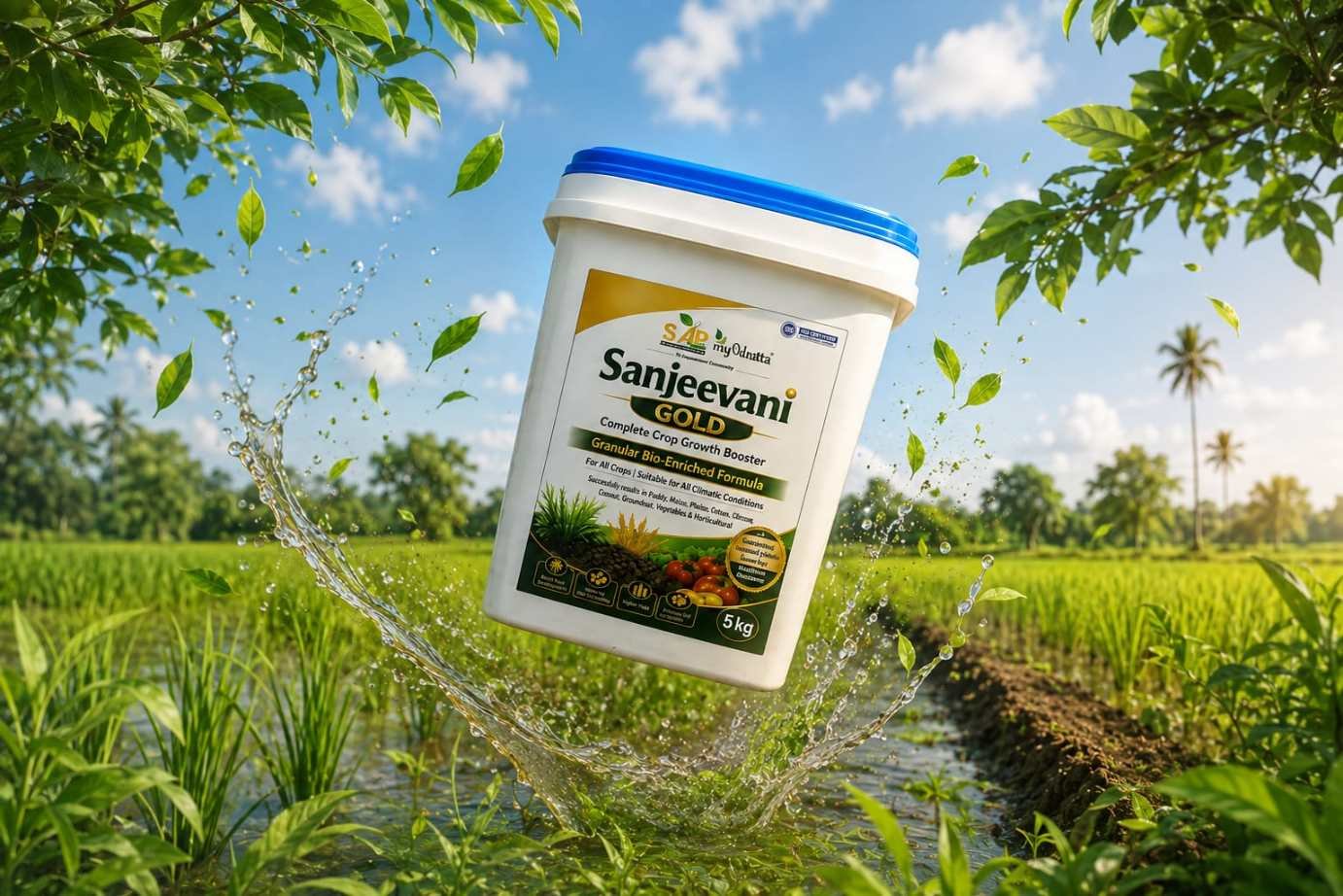
Sanjeevani Gold — seaweed in a complete formula
SAP MyVatika’s Sanjeevani Gold combines seaweed extract with humic acid, fulvic acid, organic carbon, and micronutrients in one granular product. Available in 1kg and 5kg packs, with bulk pricing and pan-India delivery in 3–5 days.
📞 Order online: sapmyvatika.com
🌿 Kisan Helpline: 7303037568
✅ ICAR Recommended | DPIIT Recognised | ISO 9001:2015 Certified